
Education Center
Diamond Symmetry
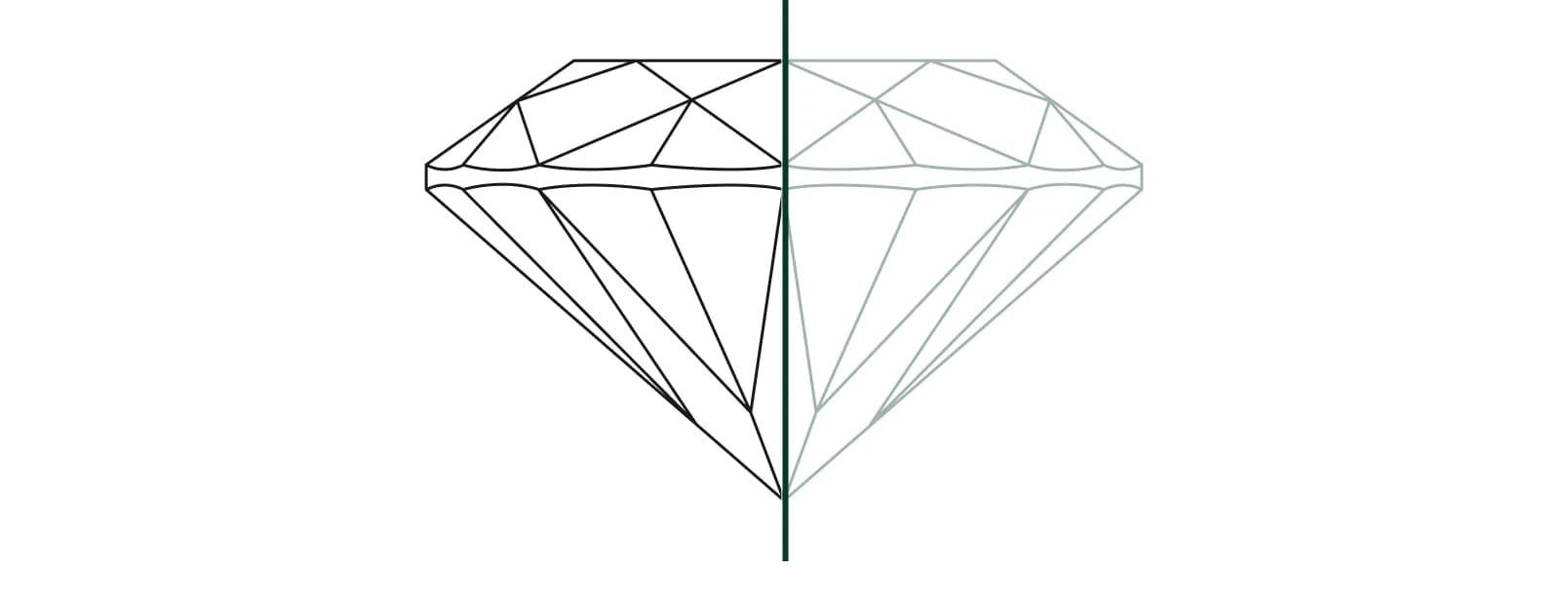
Symmetry refers to the exactness of the shape and arrangement of facets in a diamond, playing a crucial role in its overall appearance and brilliance. Although to the naked eye, symmetry might seem like a minor detail, it significantly affects how light is reflected within the diamond, enhancing its sparkle and fire. In diamonds with lower clarity grades, symmetry is less critical because inclusions are more noticeable. However, in diamonds with very high clarity grades, symmetry becomes extremely important, as it ensures the facets are perfectly aligned, maximizing the diamond’s visual appeal and brilliance.
Wavy Girdle
The girdle of a diamond should be a flat plane, parallel to the table. In this example the girdle “waves” as it wraps around the diamond.

Wavy Girdle
The girdle of a diamond should be a flat plane, parallel to the table. In this example the girdle “waves” as it wraps around the diamond.
Crown & Pavilion Misalignment
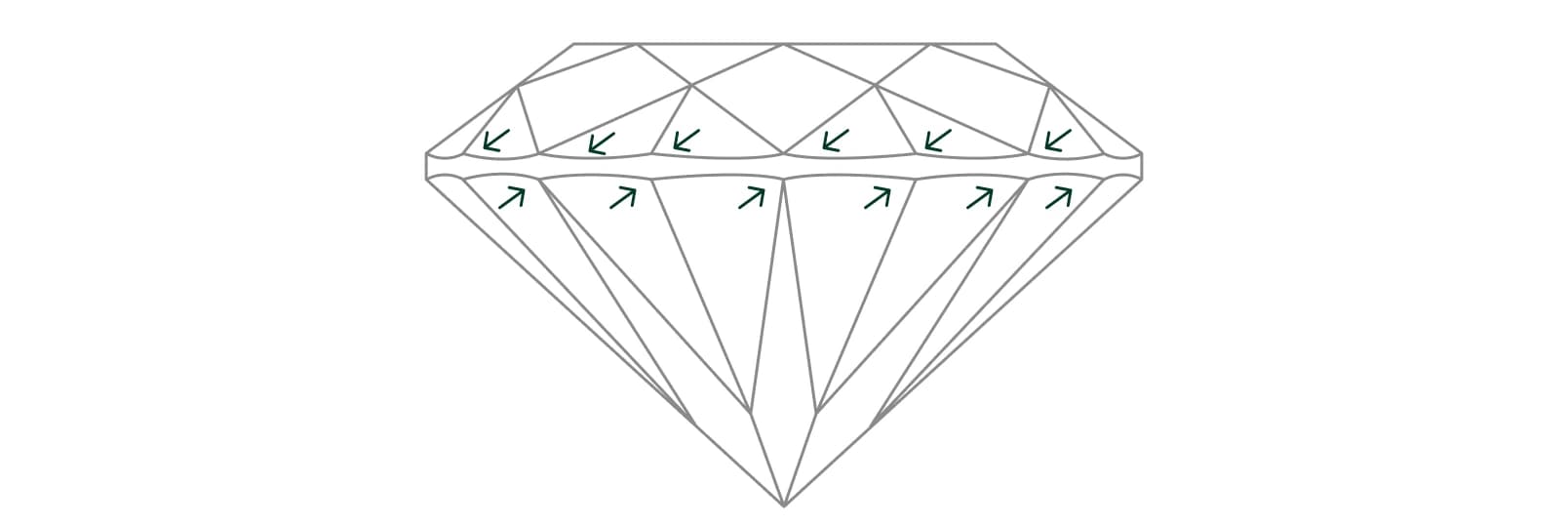
In a round diamond the top points of the pavilion mains and the bottom points of the bezel facets should meet precisely at the girdle. We can see in this example the diamond’s crown and pavilion facets are misaligned.
Crown & Pavilion Misalignment
In a round diamond the top points of the pavilion mains and the bottom points of the bezel facets should meet precisely at the girdle. We can see in this example the diamond’s crown and pavilion facets are misaligned.
Extra Facets
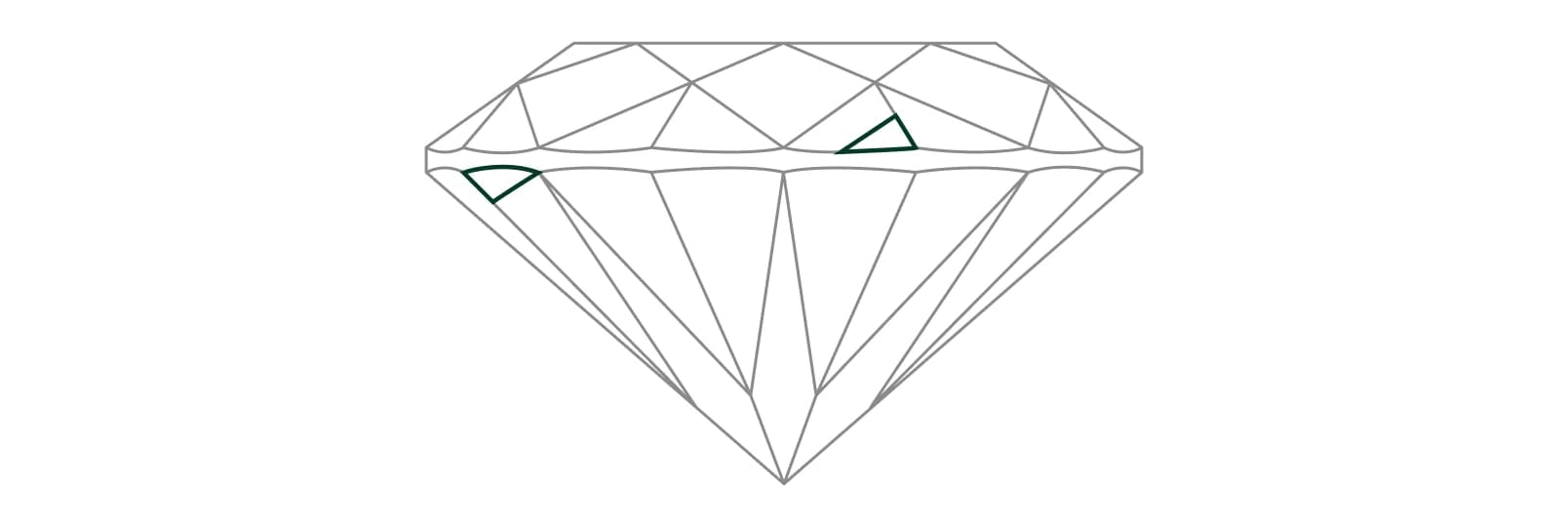
These are typically located on the pavilion, near the girdle, but they can be found anywhere on a diamond. In this example we see where extra facets commonly occur.
Extra Facets
These are typically located on the pavilion, near the girdle, but they can be found anywhere on a diamond. In this example we see where extra facets commonly occur.
Off-Center Culet
To check if the culet is centered, look at the diamond in the face-up position. You’ll see the lower girdle facets through the table. If the lines formed by them look like a perfect square, the culet is centered. If the cross bends one way of the other, the culet is not centered. In this example we see what an off-centered culet might look like.

Off-Center Culet
To check if the culet is centered, look at the diamond in the face-up position. You’ll see the lower girdle facets through the table. If the lines formed by them look like a perfect square, the culet is centered. If the cross bends one way of the other, the culet is not centered. In this example we see what an off-centered culet might look like.
Off-Center Table
The placement of the table (the largest facet on a diamond) should be centered at the top of the stone and needs to be parallel to the girdle. If the table is off-center or not parallel with the girdle this can cause uneven crown angles from one side to the other. In this example we see the unbalanced appearance that occurs from an off-center table.`

Off-Center Table
The placement of the table (the largest facet on a diamond) should be centered at the top of the stone and needs to be parallel to the girdle. If the table is off-center or not parallel with the girdle this can cause uneven crown angles from one side to the other. In this example we see the unbalanced appearance that occurs from an off-center table.`
Table & Girdle Not Parallel
Here we see another example of what occurs when the table is not parallel with the girdle. As you see, the crown angle is much steeper on one-side than the other. From the top view you may have noticed an off-center table.
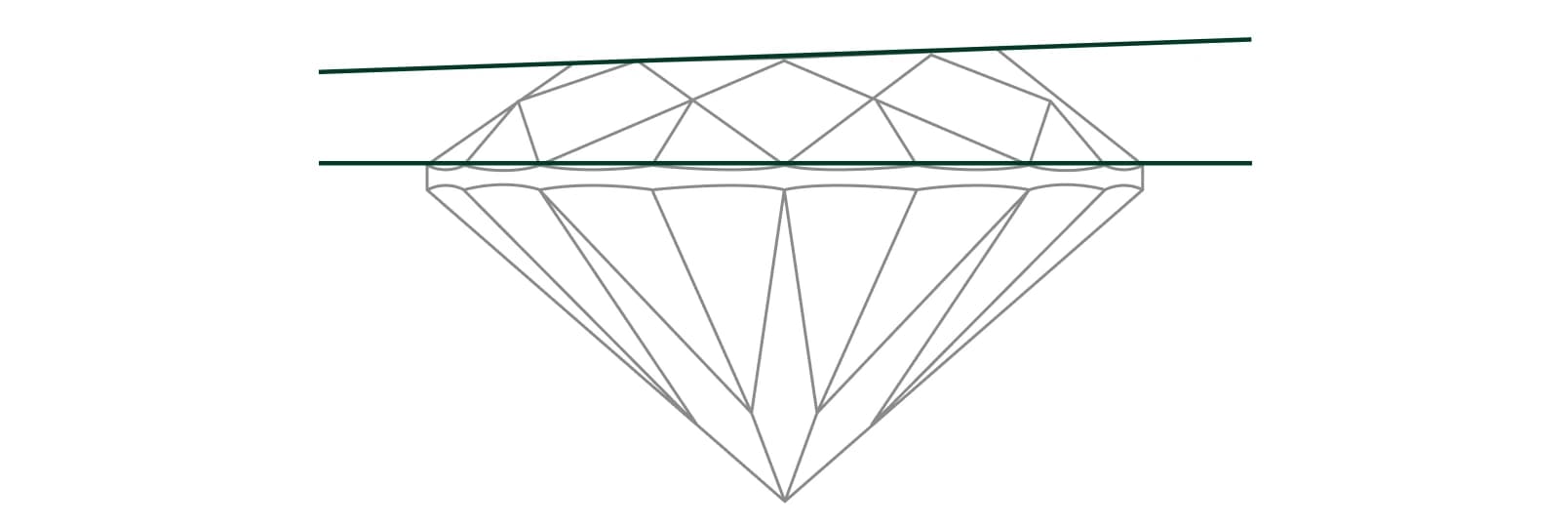
Table & Girdle Not Parallel
Here we see another example of what occurs when the table is not parallel with the girdle. As you see, the crown angle is much steeper on one-side than the other. From the top view you may have noticed an off-center table.
Misshapen Facets
A correct table displays a regular octagon shape. It should have eight sides of equal length that are each parallel to the opposing opposite facet. In this example we see facets that are not properly shaped, or they are not the same size and shape as others like them on the face of the diamond.

Misshapen Facets
A correct table displays a regular octagon shape. It should have eight sides of equal length that are each parallel to the opposing opposite facet. In this example we see facets that are not properly shaped, or they are not the same size and shape as others like them on the face of the diamond.
Facets Not Pointing Up
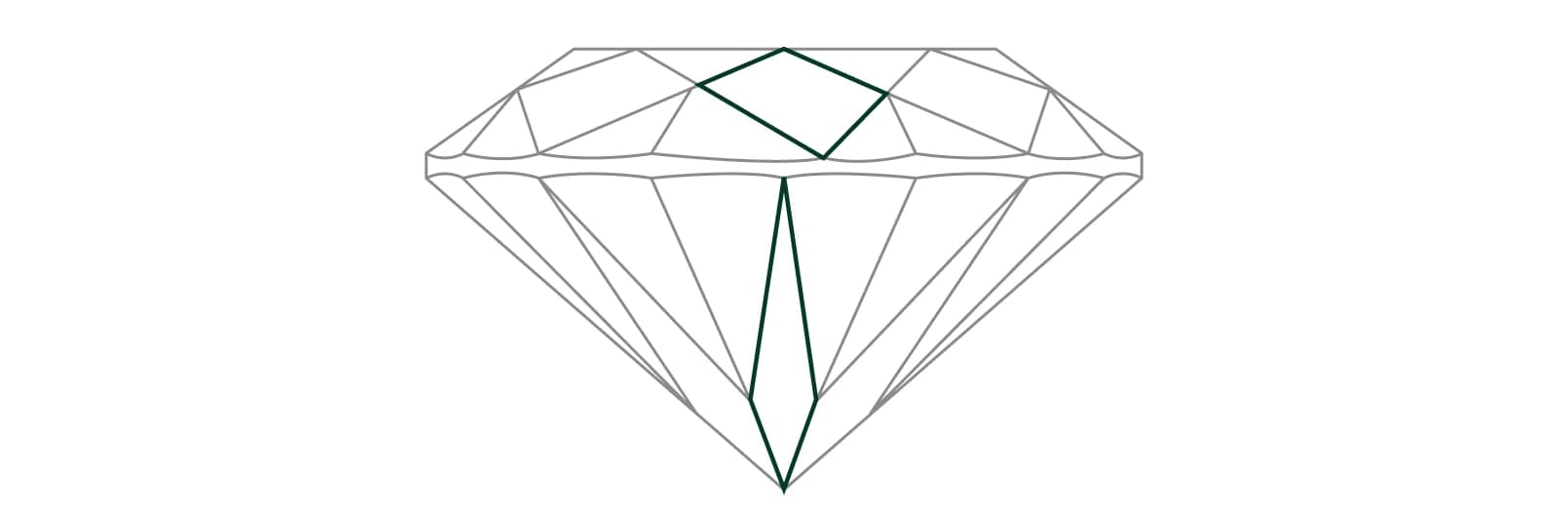
Some diamonds display facets that are not properly pointed. Facet patterns of round brilliants are meant to show a precise arrangement of 58 perfectly shaped facets. In this example we see some that some do not meet at a direct point.
Facets Not Pointing Up
Some diamonds display facets that are not properly pointed. Facet patterns of round brilliants are meant to show a precise arrangement of 58 perfectly shaped facets. In this example we see some that some do not meet at a direct point.
Naturals on Crown and Pavilion
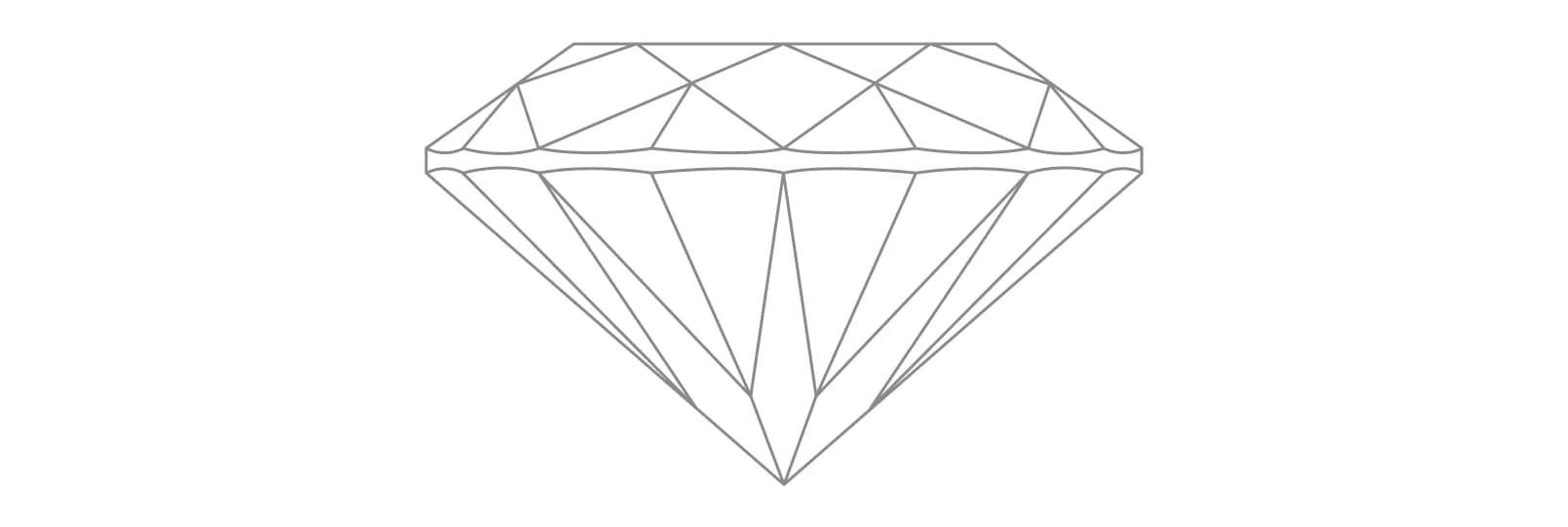
A natural is the original “rough” of the diamond. Naturals always occur or start out on the girdle. They either dip towards the pavilion or the crown. In this example we see the natural located on the girdle running down into the pavilion.
Naturals on Crown and Pavilion
A natural is the original “rough” of the diamond. Naturals always occur or start out on the girdle. They either dip towards the pavilion or the crown. In this example we see the natural located on the girdle running down into the pavilion.