
Education Center
Diamond Color
When shopping for a diamond, it is generally preferred to choose a stone with the least amount of color possible, as this enhances its brilliance and value. Diamond color is graded on a scale from D to Z and is divided into five broad categories: colorless, near colorless, faint, very light, and light. The closer a diamond is to being colorless, the higher its value and rarity. However, diamonds can naturally occur in a range of colors across the spectrum, with the most common hue being yellow. This yellow tint is typically caused by trace amounts of the element nitrogen within the diamond’s structure.
Understanding the nuances of diamond color can significantly influence your buying decision. While diamonds graded D are completely colorless and incredibly rare, those graded Z have a noticeable yellow or brown tint. In the intermediate grades, the differences in color are often subtle. Generally, to perceive a noticeable difference in color between two diamonds, they need to be at least two color grades apart. This subtlety is especially true when diamonds are viewed from the top or face-up position, where they exhibit their most brilliant and dazzling appearance.
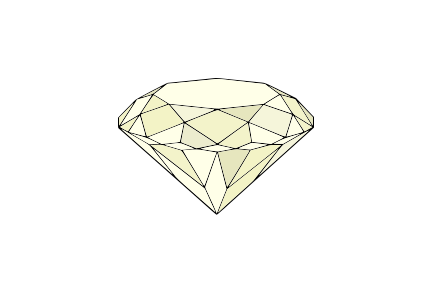 MLKJIHGFED
Faint
While these diamonds may have a slight warmth to them, they still provide excellent value.
When shopping for a diamond, it is generally preferred to choose a stone with the least amount of color possible, as this enhances its brilliance and value. Diamond color is graded on a scale from D to Z and is divided into five broad categories: colorless, near colorless, faint, very light, and light. The closer a diamond is to being colorless, the higher its value and rarity. However, diamonds can naturally occur in a range of colors across the spectrum, with the most common hue being yellow. This yellow tint is typically caused by trace amounts of the element nitrogen within the diamond’s structure.
Understanding the nuances of diamond color can significantly influence your buying decision. While diamonds graded D are completely colorless and incredibly rare, those graded Z have a noticeable yellow or brown tint. In the intermediate grades, the differences in color are often subtle. Generally, to perceive a noticeable difference in color between two diamonds, they need to be at least two color grades apart. This subtlety is especially true when diamonds are viewed from the top or face-up position, where they exhibit their most brilliant and dazzling appearance.

Completely Colorless Diamonds (D-F):
Diamonds within the colorless range are the most rare and valuable of all those on the color scale. D/E color stones display virtually no color, whereas F colored diamonds will display a nearly undetected amount of color when viewed face down by a gemologist.

Near Colorless Diamonds (G-I):
Diamonds within the near colorless range appear colorless in the face up position, but do display a slight amount of color when viewed face down against a perfectly white background. This trace amount of color will be undetectable to an untrained eye once the diamond has been mounted. Near colorless diamonds offer a tremendous value for their price.

Faint Color Diamonds (J-M):
Diamonds within the faint color category may show a slight hint color when viewed in the face up position; however, these are another wonderful option for those who are not sensitive to color. Some even love the color scheme that is displayed from these diamonds.